Material hub
Work Boots That Can Be Rebuilt: What to Buy and What It Costs to Keep
A boot with a stitched sole can be taken apart and put back together. A boot with a bonded sole cannot. Everything else on this page follows from that one fact.
This is the boots section of the log. Below is what the families of construction actually are, what a decade of keeping one pair costs, and where to go next depending on what you are trying to decide.
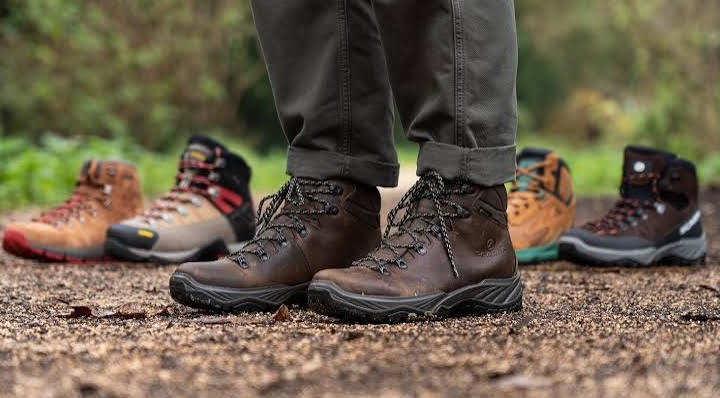
Why Do Some Boots Have a Second Life and Others Do Not?
Because of how the sole is attached. Stitching is reversible by design: cut the thread and the parts separate undamaged. Cement is not, because the bond is the joint.
You can settle the question in four seconds by looking at the edge of the sole from the side. A visible line of thread means somebody built the boot expecting it to be opened. A clean rubber edge with no thread, or with perfectly even stitching that came out of a mould, means nobody did.
This has almost nothing to do with price. I have opened up modestly priced boots that were built to be reopened and expensive ones that were not. The welted constructions exist for exactly this reason, and a brand that uses one will tell you what a resole costs without being asked twice.
The Families of Boot Worth Knowing
Four, and only the first three can be rebuilt. Everything sold as a work boot falls into one of them.
| Construction | How the sole attaches | Rebuilds it will take | Where it belongs |
|---|---|---|---|
| Goodyear welt | Upper turns inward, stitched to a rib on the insole | Three to four | Service, dress and general work boots |
| Stitchdown | Upper turns outward, stitched down through the midsole | Two to three | Logging, wildland fire, heavy field work |
| Blake stitch | One line straight through insole, midsole and outsole | Two, if you can find the machine | Lighter and dressier boots |
| Cemented | Sole glued to the upper | None | Most of what is on a shelf |
The two that matter for anyone buying a boot to keep are set against each other in detail in our comparison of stitchdown and Goodyear welt construction.
What Does Keeping a Pair Actually Cost?
On our longest record, 800 dollars across nine seasons, which is 89 dollars a season and still falling. That total includes two resoles.
The pair went into service in spring 2017 at 470 dollars. It has been resoled twice, at 152 and 178 dollars, the second job including a patch to the welt that added 26 dollars and three weeks. It is still in service, and the working assumption is that it has one more sole in it.
Set that against replacing a 190 dollar cemented boot every second winter and the arithmetic is not close. Set it against needing boots next Tuesday, in the middle of an eleven week resole queue, and it looks very different. Both of those are true at the same time.
Where the 800 dollars went, in the order it was spent:
- 470 at the counter in 2017. The whole premium over a cemented boot sits in this line and nowhere else.
- 152 at the end of season four. Routine outsole swap, welt untouched, six weeks away.
- 178 at the end of season seven. Outsole plus a 40 mm welt patch, eleven weeks away, and the warning that the platform is ageing.
- Around 20 in dressing across nine years. The cheapest line on the list and the one that kept the upper alive long enough for the rest to matter.
Expert note from Marisol Quintanar, textiles and waterproofing
Everyone shopping for boots looks at the sole and forgets that the upper is the half you cannot replace. A resole is money spent on the bottom. If the leather has gone hard and cracked across the flex point, or the lining has worn through at the heel, you are buying a new sole for a boot that will fail somewhere else next winter.
What Wears Out, and in What Order?
Almost always in the same sequence, which is useful because it tells you where you are in a boot’s life without guessing.
- Outsole tread, at the ball of the foot. Season three to five in regular use. A wear item, and the cheapest thing on the list to put right.
- Heel block. Often before the outsole, and often replaceable on its own for very little.
- Laces and hardware. Annoying, trivial, and no reason to retire anything.
- The welt or stitching platform. Season seven onward. This is the one that ends the boot, because it is the structure everything else attaches to.
- The upper at the flex crease. Anywhere from season five to never, depending entirely on whether the leather was fed.
Which is why dressing the leather matters more than most people think, and why we gave it its own page: what greases, oils and dressings actually do for a leather boot.
Where to Go Next, by Question
Four pages, depending on what you are actually trying to decide.
Should I repair it?
What it costs to resole boots, and when it stops being worth it, with nine seasons of invoices on one pair.
What should I buy?
Stitchdown or Goodyear welt: which boot can actually be rebuilt, and how to tell them apart in a shop.
What are the parts?
The anatomy of a work boot, part by part, and which of those parts end its life.
How do I keep it?
Greases, oils and dressings, and what each of them is really for.
What about winter?
Pac boots and whether an insulated winter boot can be rebuilt.
The Part Nobody Budgets For
Finding somebody to do the work. Construction sets the ceiling, and local repair capacity sets what you actually get.
- Find your nearest shop that will take welted work before you buy the boot, not after it wears out.
- Ask what they will not do. A shop that lists its refusals knows its limits.
- Ask the current lead time and add three weeks. Every honest shop we deal with is booked out by months.
- If the answer is that the nearest one is in another state, price the freight into the boot before you decide it is repairable.
The same decision applied across knives and textiles as well as boots sits on the pillar guide to what can be repaired, what it costs and when to stop.
Expert note from Lowell Trask, editor, boots and leather
Twenty years ago I could name six shops within ninety miles that would take stitchdown work. Today there are two, and I am one of the people who retired. The trade did not lose its skills, it lost its apprentices, and when a resoler in a small town closes he takes the capacity for a whole county with him. That is now the real limit on whether your boots are repairable, not how they were built.