Blades and edges
Rehandling a Knife: What It Costs and What You Get Back
Eighty five to a hundred and forty dollars, two to five weeks, and a knife that is functionally new above the blade. It is the cheapest large repair in the log.
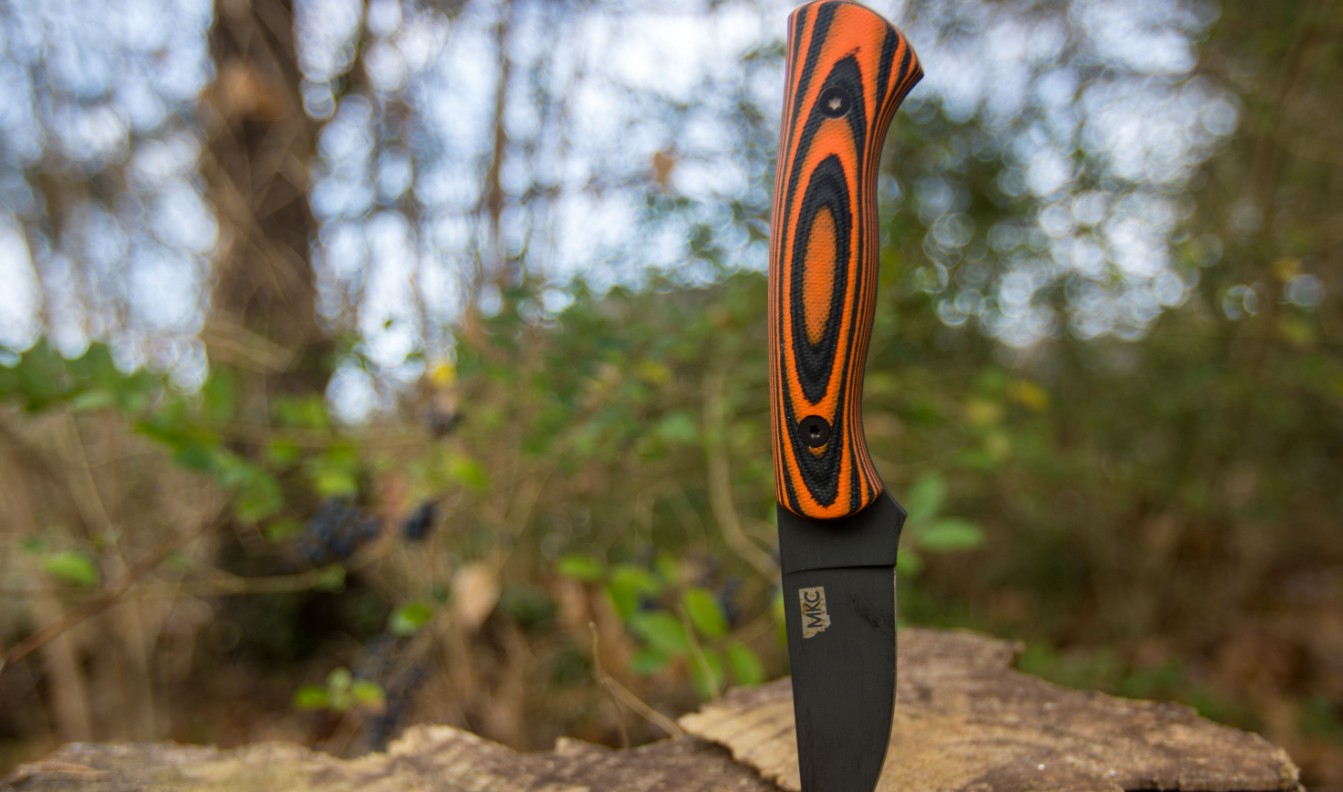
What Does a Rehandle Cost?
Between 85 and 140 dollars for scales on a full tang knife, and two to five weeks. Hidden tang knives run higher because the handle has to come off without damaging the blade.
For context, that is less than a boot resole and roughly a third of what a full boot rebuild costs. It is the best value large repair anywhere in our log, and it is the one people are least likely to have considered, because the handle is the part of a knife nobody thinks about until it splits.
The price covers material, shaping, fitting and finishing. Exotic material costs more, but not as much more as people assume: the labour dominates, and shaping stabilised maple takes about as long as shaping stag.
Which Knives Can Be Rehandled?
Anything where the handle is a separate part fastened to the tang. Anything moulded around the tang is finished when the handle is.
The four second check is the same one Lowell uses on a sole edge. Look at the join between handle and blade for fasteners. Pins, bolts, corby fasteners, a visible seam where two scales meet: somebody expected this to come apart. A single smooth piece of injection moulded polymer with no seam: nobody did.
- Full tang with pinned or bolted scales. Routine. The usual case, and the cheapest.
- Hidden tang with a fitted handle. Possible and common on traditional knives, but the handle usually has to be destroyed to remove it, which is fine because you are replacing it.
- Moulded polymer around the tang. No. There is no non destructive path in, and rebuilding one costs more than the knife.
- Folding knives. Depends entirely on whether the scales are screwed to the liners. Many are, and those are straightforward.
Expert note from Lowell Trask, editor, boots and leather
This is the conversation I have every week with different nouns. Is the joint fastened or is it bonded. Fastened means somebody thought about the second owner. Bonded means the object was priced for one life. It has nothing to do with how much it cost, I have opened up cheap boots that were built to be reopened and expensive ones that were not.
What Do You Get Back?
Grip, balance and about a decade. Handle material is the fastest wearing part of a knife you use, and it is also the part that decides whether you enjoy using it.
The 2019 fixed blade in our log has been rehandled once, in 2023, for 118 dollars. The original scales were a resin impregnated wood that had shrunk enough to leave the tang proud at the spine, which is the point where a handle stops being uncomfortable and starts being a hazard in the wet. The replacement is canvas micarta, which will not move again.
| Handle material | What it is good at | What it does badly | Realistic service life |
|---|---|---|---|
| Stabilised hardwood | Looks and warmth in the hand | Moves with humidity if poorly stabilised | 10 to 20 years |
| Stag and bone | Grip when wet, character | Cracks with age, availability varies | Decades, with cracking |
| Canvas or linen micarta | Grip when wet or bloody, dimensional stability | Wears smooth eventually, plain to look at | 20 years and up |
| G10 | Hardest wearing, unaffected by anything | Cold, abrasive on the hand over a long day | Effectively indefinite |
| Moulded polymer | Cheap, consistent, comfortable when new | Cannot be replaced when it fails | Life of the knife |
When Is It Not Worth It?
When the blade behind the handle has nothing left. A hundred and twenty dollar handle on a blade that has lost a third of its width is money spent on the wrong half.
Expert note from Marisol Quintanar, textiles and waterproofing
One thing worth adding from the materials side: whatever goes on the handle has to survive being wet and then dried, over and over, which is the cycle that destroys most things. Natural materials move with that cycle and synthetics do not. If a knife lives in a wet coat pocket all season, that is an argument for micarta over a lovely piece of wood, however much nicer the wood looks on the bench.
Measure before you order. If the blade is close to the end of its useful geometry, and you can tell with a caliper in a minute, then the rehandle is buying you a comfortable grip on a knife that is going to be retired anyway. Where that limit sits, and how to find it, is in our measurement of how much a blade loses to each sharpening.
The trade worth stating: a rehandle is cheap in money and expensive in time. Five weeks without a knife you use daily is a real cost, and the honest answer for a working professional is often to own two and rotate them, which of course doubles the purchase price the log is trying to justify.
At the Bench
Three things that decide whether a rehandle comes back right, and none are about the material.
- Pin spacing. Reusing the original holes is faster and cheaper. New holes cost more, and on a hardened tang can mean annealing spots. Ask which one your knife needs before you agree a price.
- Fit at the ricasso. The gap where the scales meet the blade is where moisture and blood get in, and it is the one place a hurried job shows within a season. A hairline there means the work is not finished.
- Shape, not just material. A rehandle is the natural moment to change what never fitted. Most people replace like for like out of habit, then spend another eight years fighting the same handle.
The Same Question as a Boot
A knife handle and a boot sole are the same part in different materials: the wear item you are supposed to be able to replace.
- Check the join for fasteners or stitching. That decides whether the repair exists at all.
- Measure what is left of the part you cannot replace, the blade or the upper.
- Price the repair against a third of replacement cost.
- Find out who does the work within reach before you count on it.
Makers who build custom knives one at a time price this in from the start. Ask one about a rehandle in fifteen years and the answer is usually yes, send it back, because the knife was drawn up as an assembly rather than a product. That is the same reasoning behind a stitched welt, laid out in our comparison of stitchdown and Goodyear welt construction, and the full decision sits on the pillar guide to what can be repaired and when to stop.